


In a world where borders blur and alliances shift faster than a politician’s promise, international politics shapes the very fabric of global society. It’s like a high-stakes game of chess, but with more drama, unexpected plot twists, and the occasional diplomatic faux pas that leaves everyone scratching their heads.
Overview of International Politics
International politics involves intricate interactions among nations. Cooperation and competition often define these relationships. Multilateral organizations such as the United Nations play crucial roles in fostering dialogue and resolving conflicts. Nations pursue their interests, which can lead to alliances or rivalries.
Diplomatic strategies frequently adapt to changes in the global landscape. Trade agreements exemplify how economic ties influence political partnerships. In addition, security pacts provide frameworks for military collaboration against common threats.
Conflicts can arise from diverse cultural, historical, and territorial disputes. Regional tensions often spill into the international arena, impacting global stability. Nuclear non-proliferation initiatives target the prevention of nuclear weapons spread, underscoring the significance of international cooperation.
Human rights issues solicit widespread attention, as various nations uphold differing standards. Advocacy groups press for accountability, affecting diplomatic relations between countries. Climate change also emerges as an essential factor; global warming impacts international policies and necessitates collective action.
Globalization reshapes international politics, as interconnected economies and societies blur traditional boundaries. Cybersecurity threats redefine national security priorities in the digital age. Moreover, public opinion influences policymakers, often demanding more involvement in global issues.
Geopolitical strategies hinge on resource distribution, with energy security frequently at the forefront of national concerns. Competition for resources ignites geopolitical rivalries, especially in energy-rich regions. Ultimately, the landscape remains fluid, requiring constant adaptation to evolving circumstances.
Key Theories in International Politics
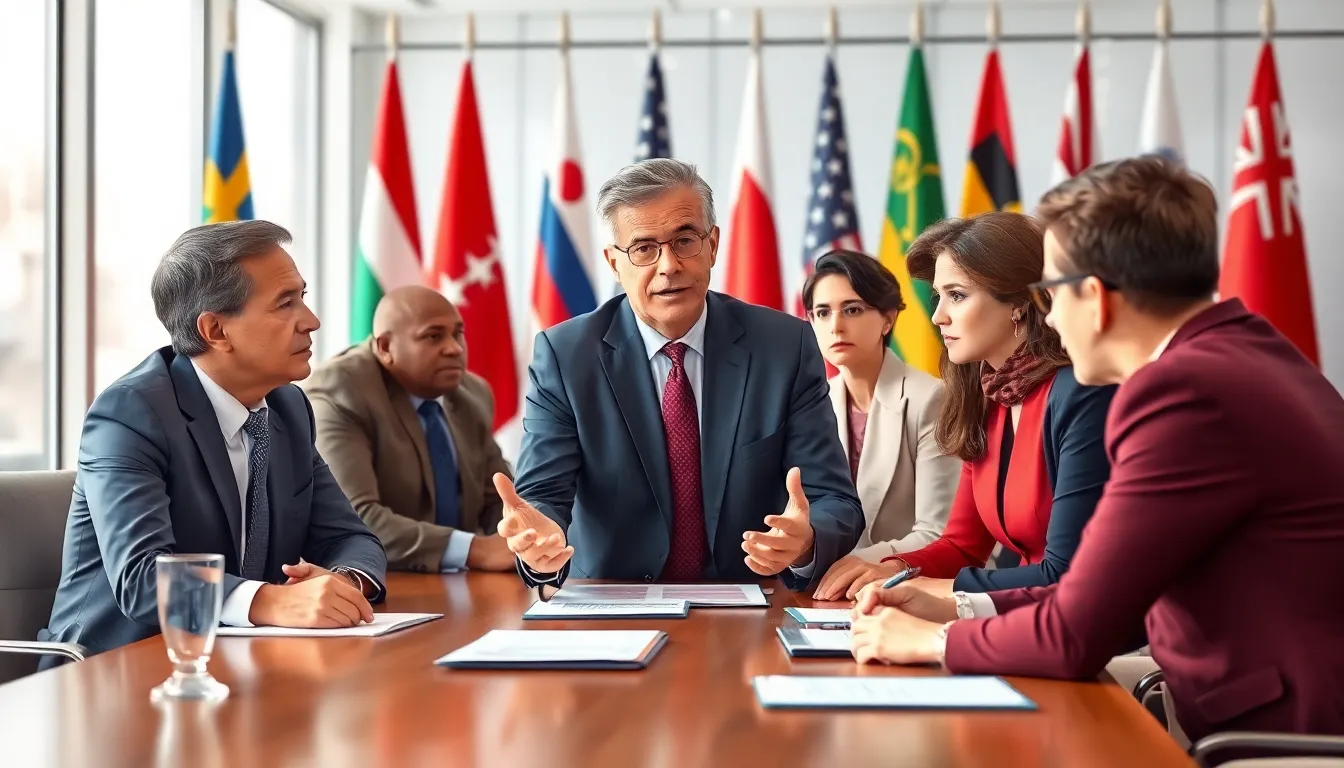
International politics operates through various theories that explain state behavior and interactions. Three key theories—realism, liberalism, and constructivism—provide distinct lenses for understanding global affairs.
Realism
Realism emphasizes the competitive and conflictual aspects of international relations. States act primarily in self-interest, prioritizing national security and power. Military strength often dominates decision-making processes. Realists argue that international politics is anarchic, as no central authority exists. Competition for resources and strategic advantages drives state actions. Historical events, such as World War II and the Cold War, exemplify realist principles. Scholars like Hans Morgenthau and Kenneth Waltz have shaped this theory, stressing that power dynamics dictate international outcomes.
Liberalism
Liberalism focuses on cooperation and the potential for peaceful interactions among states. It highlights the importance of international institutions, democracy, and economic interdependence in promoting stability. States can achieve mutual benefits through alliances and multilateral agreements. Liberal theorists like Robert Keohane and Joseph Nye argue that global governance frameworks—such as the United Nations—facilitate dialogue and conflict resolution. Economic ties, such as trade relations, also play a crucial role in fostering cooperation. The rise of globalization reflects liberal ideals, demonstrating how interconnectedness can reduce conflict.
Constructivism
Constructivism highlights the significance of social constructs in shaping international relations. It asserts that state behavior is influenced by ideational factors such as identity, norms, and culture. Constructivists argue that international reality is not fixed but socially constructed through interactions. Scholars like Alexander Wendt emphasize that national interests evolve and can be reshaped by social contexts. The role of non-state actors, like NGOs and transnational organizations, further illustrates the importance of collective identities in diplomacy. Diplomatic strategies often adapt to changing narratives, demonstrating constructivism’s relevance in contemporary politics.
Major Global Organizations
Major global organizations play pivotal roles in shaping international politics, facilitating diplomacy, and addressing global challenges.
United Nations
The United Nations (UN) promotes peace, security, and international cooperation. Founded in 1945, its primary objectives include preventing conflict and fostering dialogue among member states. The UN comprises 193 member countries, enabling them to collaborate on diverse issues, such as human rights and humanitarian aid. Specialized agencies, like UNICEF and WHO, work alongside the UN to tackle specific challenges faced by nations. Peacekeeping missions underscore the organization’s commitment to stability, with thousands of personnel deployed worldwide to mitigate conflicts. Through frameworks like the Sustainable Development Goals, the UN also guides nations toward achieving sustainable growth.
NATO
The North Atlantic Treaty Organization (NATO) serves as a military alliance promoting collective defense. Established in 1949, NATO includes 31 member countries primarily from North America and Europe. Each member commits to mutual defense, ensuring that an attack on one constitutes an attack on all. This principle fosters solidarity and strengthens deterrence against potential aggressors. NATO also engages in crisis management and cooperative security, adapting to modern threats like terrorism and cybersecurity. By conducting joint military exercises and enhancing interoperability, NATO enhances member states’ defensive capabilities, reflecting its ongoing evolution in the face of complex security challenges.
European Union
The European Union (EU) emphasizes economic and political integration among its 27 member states. Founded in the aftermath of World War II, the EU aims to foster unity and prevent conflict through cooperation. The single market facilitates the free movement of goods, services, and people, promoting economic growth and stability. Various policies govern key areas, such as trade, agriculture, and regional development, enhancing the EU’s global influence. The use of a common currency, the euro, further strengthens economic ties among members. Additionally, the EU plays a significant role in addressing challenges like climate change and migration, demonstrating its commitment to collective action on global issues.
Current Issues in International Politics
International politics faces various pressing challenges today, exerting considerable influence on global relationships. Climate change, geopolitical conflicts, and economic disparities represent crucial areas of concern.
Climate Change
Climate change poses significant risks to international stability. Rising temperatures lead to extreme weather events, affecting agricultural production and displacing populations. Nations increasingly recognize the need for collective action to mitigate these effects. Policies promoting sustainable practices and renewable energy adoption are gaining momentum. International agreements, like the Paris Agreement, strive to unite countries in the fight against climate change. Demonstrating leadership in this area fosters diplomatic goodwill, as nations collaborate on shared environmental goals.
Geopolitical Conflicts
Geopolitical conflicts continue to challenge international relations. Tensions in regions such as Eastern Europe and the South China Sea threaten global security. Rivalries fueled by territorial disputes and ethnic tensions complicate diplomatic efforts. Key players in these conflicts often seek to expand influence, prompting military posturing and alliances. International organizations play a vital role in mediating these disputes, facilitating dialogue, and promoting peace. Developing effective strategies to prevent escalation requires unity among nations invested in maintaining global stability.
Economic Disparities
Economic disparities warp international relations, creating inequalities among nations. Wealth distribution influences political power and diplomatic leverage. Developing countries often struggle to secure resources and opportunities, perpetuating cycles of poverty. Economic cooperation, through trade agreements and aid, can address these disparities. Collaborative efforts aim to enhance prosperity in underdeveloped regions, fostering stability. Inequities in development can lead to migration and social unrest, underscoring the need for equitable economic policies that benefit all nations.
The landscape of international politics remains ever-evolving and complex. As nations navigate alliances and rivalries, the influence of global organizations becomes increasingly vital. Addressing pressing issues like climate change and economic disparities requires collaborative efforts and innovative diplomatic strategies.
With public opinion shaping policy choices, leaders must remain attuned to the shifting tides of global sentiment. The interplay of historical, cultural, and territorial factors continues to challenge stability, underscoring the necessity for ongoing dialogue and cooperation.
Understanding the various theories of international relations offers valuable insights into state behavior and interactions. As the world faces new challenges, the importance of adaptive strategies and collective action cannot be overstated. The future of international politics hinges on nations’ ability to work together, fostering a more stable and secure global environment.


