
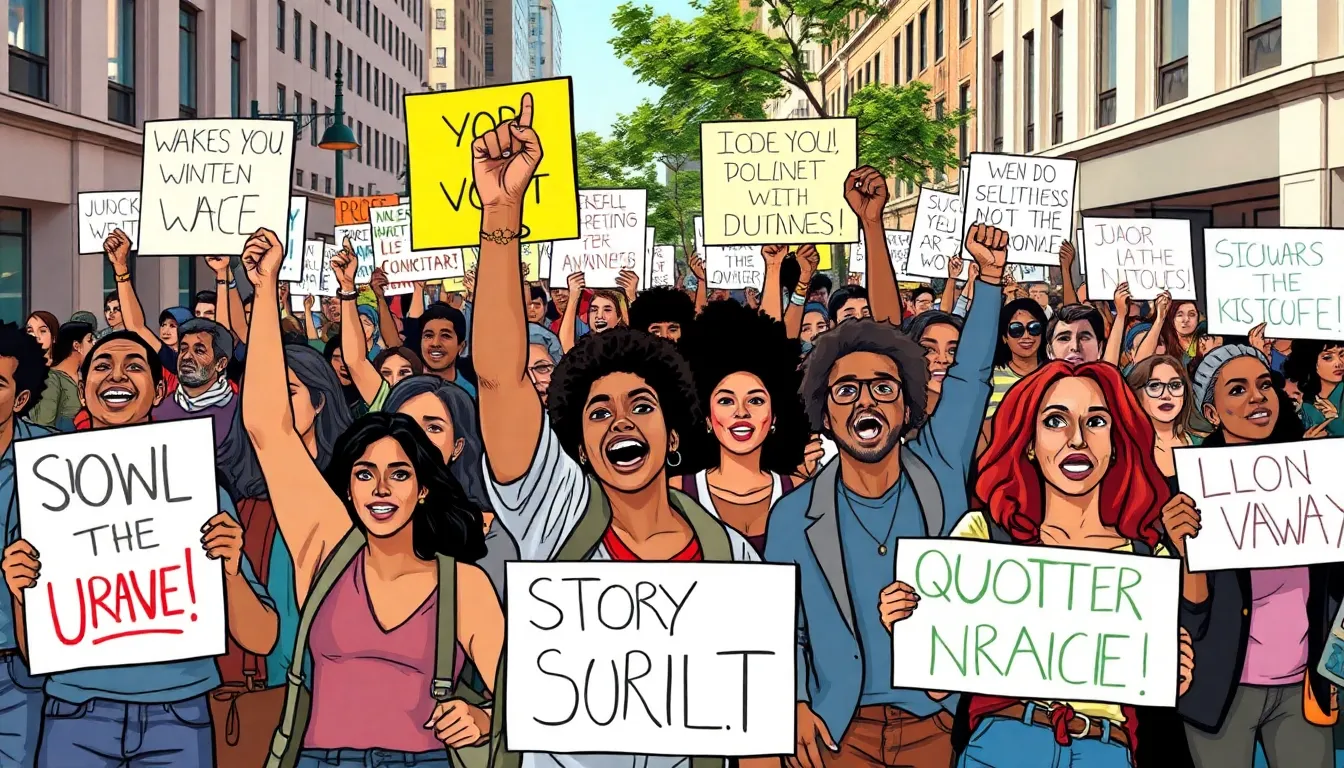

Political revolution isn’t just a buzzword tossed around in heated debates; it’s the thunderous roar of change that shakes the very foundations of society. When people grow tired of the status quo, they don’t just sit back and binge-watch their favorite shows. They rise up, fueled by a mix of frustration and hope, ready to rewrite the rules.
Imagine a world where citizens demand accountability from their leaders, where the power of the people isn’t just a catchy phrase but a reality. Political revolutions have shaped history, from the American Revolution to the Arab Spring, proving that when enough voices unite, they can topple empires—or at least get a few politicians sweating. Buckle up as we dive into the whirlwind of political revolutions, exploring their causes, impacts, and the quirky characters who lead the charge.
Understanding Political Revolution
Political revolution embodies a significant shift in power dynamics and societal structures. This movement arises when people demand profound changes in governance and social order.
Definition and Key Concepts
Political revolution refers to the rapid and often radical transformation of a political system. It typically involves the overthrow of an existing government. Citizens engage in collective action to express discontent with current leadership. Key concepts include social justice, democracy, and accountability. Scholars often distinguish between peaceful revolutions, where change occurs without violence, and violent uprisings, which involve armed conflict. Understanding these distinctions helps clarify the motivations and consequences of such movements.
Historical Context
Historical context provides essential insights into political revolutions. The American Revolution, occurring between 1775 and 1783, exemplifies a successful fight against colonial rule. The French Revolution of 1789 illustrates the demand for equality and liberty. In more recent times, the Arab Spring, beginning in 2010, showcases citizens across multiple countries seeking democratic reforms. Each event reflects unique triggers like economic hardship, oppression, or widespread corruption, driving populations to seek drastic changes. The common thread lies in people uniting under shared aspirations for a better future.
Causes of Political Revolution

Political revolutions emerge from a combination of factors that motivate citizens to seek change.
Social Factors
Social factors play a pivotal role in igniting political revolutions. Discontent often stems from inequality and social injustice that marginalized groups experience. Citizens affected by discrimination unite to voice their needs and aspirations. A decline in public trust towards authorities exacerbates tensions. Additionally, widespread social movements, rooted in the quest for democratic rights, promote collective action. Historical events, like the Civil Rights Movement in the United States, exemplify how social advocacy contributes to political upheaval. Social media further amplifies these grievances, allowing rapid communication and mobilization among individuals.
Economic Factors
Economic conditions frequently catalyze political revolutions. High unemployment rates and widespread poverty create dissatisfaction among the populace. Economic crises, driven by factors such as inflation and corruption, prompt citizens to demand accountability from their leaders. A stark divide between the wealthy elite and the working class fosters resentment, pushing people toward radical solutions. Instances of economic hardship can lead to protests, as seen during the Great Depression, when many demanded significant reform. Changing economic landscapes, including globalization, can destabilize existing systems, urging citizens to redefine their economic situations and political structures.
Notable Political Revolutions
Political revolutions have shaped the course of history, leading to significant governance and societal changes across various nations. Here are two notable examples.
The French Revolution
The French Revolution began in 1789 and marked the rise of the common people against monarchy and social inequality. Citizens demanded liberty, equality, and fraternity, fueled by financial crises and oppressive regimes. Key events, such as the storming of the Bastille, symbolized the struggle against tyranny. This revolution led to the establishment of the First French Republic and inspired numerous revolutionary movements worldwide. The principle of popular sovereignty emerged, reshaping political thought regarding governance and individual rights.
The Russian Revolution
The Russian Revolution involved two significant events in 1917 that dismantled centuries of imperial rule. Initially sparked by World War I’s strains, widespread dissatisfaction led to the February Revolution, causing Tsar Nicholas II to abdicate. The Bolshevik Party, under Lenin’s leadership, capitalized on unrest during the October Revolution. Promising land, peace, and bread, they seized power and established a communist state. This revolutionary wave profoundly influenced global politics, leading to the Cold War and reshaping ideologies in various nations.
Impact of Political Revolutions
Political revolutions significantly alter societal structures and economic frameworks. These events often lead to profound transformations across various aspects of life.
Social Change
Social change frequently emerges from political revolutions. People unite under shared goals, leading to heightened awareness of rights and equality. The fight against oppression inspires movements that advocate for marginalized groups. Improvements in gender rights and racial equality often follow revolutions, reflecting society’s evolving values. A notable example includes the Civil Rights Movement, which gained momentum in the wake of societal upheaval, showcasing demands for justice and inclusion.
Economic Reforms
Economic reforms frequently accompany political revolutions. Overthrowing an old regime typically catalyzes efforts to address systemic inequalities and corruption. Governments frequently implement policies aimed at improving living standards for the disenfranchised. Redistribution of wealth often occurs, especially in cases like the Russian Revolution, where land and resources were transferred to the workers. These reforms can stabilize economies and foster growth, paving the way for future progress and development.
Modern Perspectives on Political Revolution
Political revolutions continue to evolve, influenced by the changing dynamics of society and technology. Understanding these perspectives sheds light on modern movements for change.
Case Studies in Recent History
Recent revolutions illustrate the complexities of political change. The Arab Spring, beginning in 2010, saw multiple countries like Tunisia and Egypt rise against oppressive regimes. Citizens united, demanding democracy and social justice. In Venezuela, persistent economic crises stirred discontent, leading to protests against the government. Demonstrators sought relief from hyperinflation and food shortages. These case studies highlight how diverse factors—economic conditions, political oppression, and collective aspirations—drive revolutions.
The Role of Technology and Social Media
Technology fundamentally transformed the landscape of political revolutions. Social media platforms, such as Twitter and Facebook, facilitated communication among activists. Information spread rapidly, mobilizing support and organizing protests. The use of hashtags became crucial, enabling movements like #BlackLivesMatter to gain global recognition. Online platforms empowered marginalized voices, amplifying demands for change. Surveillance and censorship posed challenges, yet many activists harnessed technology to document injustices. Innovations in technology played a pivotal role in shaping modern political landscapes.
Political revolutions remain a vital catalyst for change in society. They reflect the collective will of people striving for a better future, often ignited by social injustices and economic hardships. The impact of these movements is profound, reshaping political landscapes and fostering social awareness.
In an age where technology enhances communication, the potential for revolutions to mobilize and inspire grows stronger. As history demonstrates, the fight for accountability and justice continues to resonate across generations. The lessons learned from past revolutions inform current struggles and highlight the enduring quest for equality and democracy. Political revolutions will likely remain relevant as long as the desire for change persists.


