
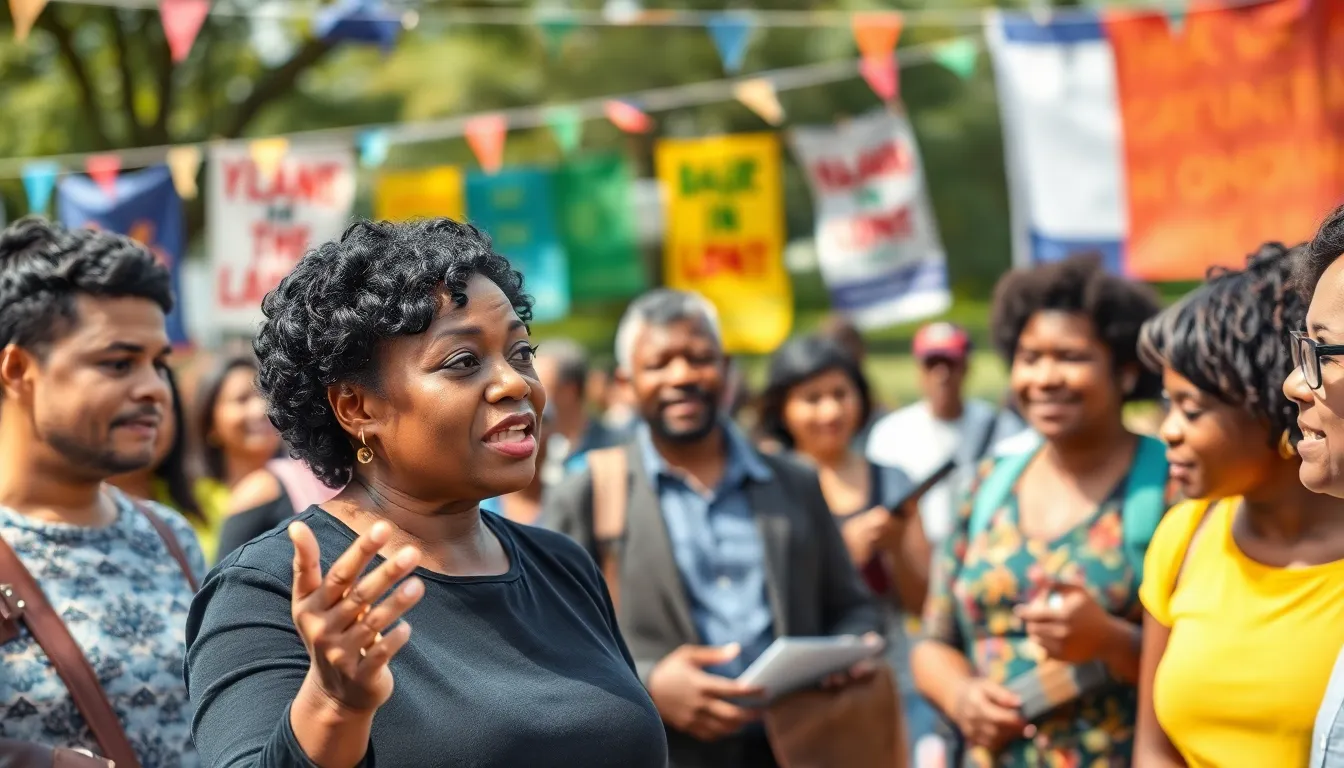

In a world where politics often feels like a circus, understanding the various political spheres can be both enlightening and entertaining. Picture this: a juggler tossing policy proposals, a tightrope walker balancing public opinion, and the occasional clown trying to make sense of it all. Political spheres shape our lives in ways we often overlook, influencing everything from local governance to global diplomacy.
Overview of Political Spheres
Political spheres encompass various dimensions that shape governance and public discourse. These spheres include local, state, national, and international levels, each contributing to the overall political landscape. Diverse actors operate within these realms, ranging from government officials to citizens and advocacy groups.
The local sphere focuses on community issues. City councils, mayors, and local organizations implement policies affecting daily life. Understanding these dynamics helps citizens engage with governance more effectively.
At the state level, legislatures create laws impacting education, healthcare, and public safety. State governments also play vital roles in federal relations. Tracking policy changes at this level reveals trends affecting the entire country.
The national sphere influences policies ranging from economic growth to civil rights. Here, Congress, the President, and the judiciary interact to shape the nation’s direction. Public opinion, party affiliation, and interest groups frequently sway decisions.
Internationally, political spheres manifest in diplomacy and global relations. Countries negotiate treaties, address climate change, and manage conflicts. Organizations like the United Nations facilitate cooperation among nations.
Political spheres serve as essential frameworks for understanding governance and public policy. Recognizing how these spheres operate enables individuals to navigate influence and participate in democratic processes effectively.
Types of Political Spheres

Political spheres can be classified into three primary categories: local, national, and global. Each sphere plays a vital role in shaping governance and public discourse.
Local Political Spheres
Local political spheres focus on community issues and governance. City councils serve as the primary decision-making bodies, addressing matters like zoning, public safety, and local infrastructure. Residents often engage with local organizations to voice concerns and influence policy changes. Elected officials at this level interact closely with constituents, ensuring responsiveness to their needs. Local advocacy groups play a significant role in mobilizing citizens around specific issues, enhancing community involvement in governance. This sphere fosters grassroots movements that can lead to substantial changes.
National Political Spheres
National political spheres encompass the broader legislative and executive processes. Congress, comprising the House of Representatives and the Senate, creates laws that influence citizens’ lives, including matters related to healthcare and education. The President leads the executive branch, implementing policies that reflect national priorities. In addition, the judiciary interprets laws, ensuring they align with constitutional principles. Citizens engage with this sphere through voting and advocacy, enabling them to impact significant issues like civil rights and economic policy. National elections and media coverage further shape public opinion within this sphere.
Global Political Spheres
Global political spheres address international relations and diplomacy. Countries navigate complex interactions through treaties and multilateral organizations like the United Nations. Global challenges such as climate change and trade require collaborative efforts, influencing national policies indirectly. Diplomatic negotiations often involve intense dialogue between state actors, aiming for cooperation and resolution. Non-governmental organizations also play a role in this sphere, advocating for human rights and environmental protections worldwide. Understanding these dynamics is crucial for individuals to comprehend how global events affect local policies and national interests.
Impact of Political Spheres on Society
Political spheres significantly influence societal structures and functions. They shape governance, affect individual lives, and mold collective experiences.
Influence on Policy Making
Policies emerge from political spheres as reflections of the complexities within them. Grassroots activism often shapes local legislation, affecting issues like education and housing. State decisions influence economic policies, impacting areas like healthcare and infrastructure. National spheres see the interaction of governmental branches, determining actions on civil rights and education reform. Decisions in one sphere frequently resonate through the others, illustrating interconnectedness in governance. Advocacy groups play a critical role, pushing for policies that align with societal needs and values.
Role in Public Opinion
Public opinion forms through interactions within political spheres. Local forums give residents a voice, shaping community perspectives on issues like crime and public health. State-level discussions influence collective sentiments about policies affecting daily lives. National issues, such as healthcare reform, often dominate media narratives, swaying public perception. Global events also affect local attitudes, particularly concerning climate policy and international relations. Through social media and traditional channels, citizens express opinions that resonate across spheres. Understanding these dynamics allows for a clearer picture of how collective sentiments drive political engagement and advocacy efforts.
Challenges Within Political Spheres
Political spheres face various challenges that hinder effective governance and public engagement. Key issues include polarization, division, corruption, and transparency.
Polarization and Division
Polarization within political spheres creates significant barriers to collaboration and consensus. Individuals align with partisan ideologies, often dismissing alternative viewpoints. This environment fosters division, making productive discourse challenging. Communities become fragmented as varying opinions clash, limiting collective problem-solving efforts. Furthermore, the media plays a crucial role in amplifying these divisions, often portraying issues in binary terms, which can lead to further escalation. Bridging these divides requires a commitment to open dialogue and understanding, enabling more constructive approaches to governance.
Corruption and Transparency Issues
Corruption undermines trust in political spheres and inhibits effective governance. Instances of bribery, embezzlement, and nepotism persist, diminishing public confidence. Additionally, transparency issues compound these problems, as citizens often lack access to vital information regarding governmental actions. Limited accountability enables unethical practices to flourish, perpetuating a cycle of distrust. Stakeholders, including advocacy groups, play a vital role in advocating for reforms that promote transparency and combat corruption. Effective measures can include stricter regulations on campaign financing and clearer reporting requirements for public officials.
Future of Political Spheres
Political spheres are evolving rapidly due to technological advancements and societal shifts. Understanding these changes is key for effective engagement in governance.
Technology and Political Engagement
Technological innovations reshape how people interact within political spheres. Social media platforms allow individuals to mobilize support for causes instantly. Online petitions gather signatures from a global audience, demonstrating widespread support for local issues. Virtual town halls offer direct communication between constituents and elected officials, fostering transparency and accountability. Digital tools enable grassroots movements to mobilize more efficiently, amplifying voices that might otherwise go unheard. Cybersecurity concerns, however, raise questions about the integrity of these platforms and the information shared. As technology continues to develop, its impact on political engagement will likely grow, requiring ongoing adaptation.
Emerging Political Movements
Emerging political movements increasingly influence the landscape of governance. Activist groups mobilize around issues like climate change, social justice, and economic inequality, drawing attention and support. They often challenge traditional political structures and push for reforms that resonate with diverse populations. Demonstrations and rallies bring together like-minded individuals, creating a sense of solidarity and urgency. These movements utilize social media to organize events and share information, allowing them to gain traction quickly. As public sentiments shift, established political entities may adapt their platforms to address these rising concerns. Observing these movements provides insight into the evolving dynamics of political spheres, highlighting changing priorities among the electorate.
Political spheres are intricate and ever-evolving arenas that shape governance and public life. They influence everything from local community issues to global diplomatic relations. Understanding these spheres is vital for effective civic engagement and informed decision-making.
As technology and societal values shift, the dynamics within these spheres will continue to transform. Citizens must remain vigilant and adaptable, leveraging new tools for advocacy and communication. By doing so, they can ensure their voices contribute to shaping the future of governance and public policy.


